

Image credit: Abondance
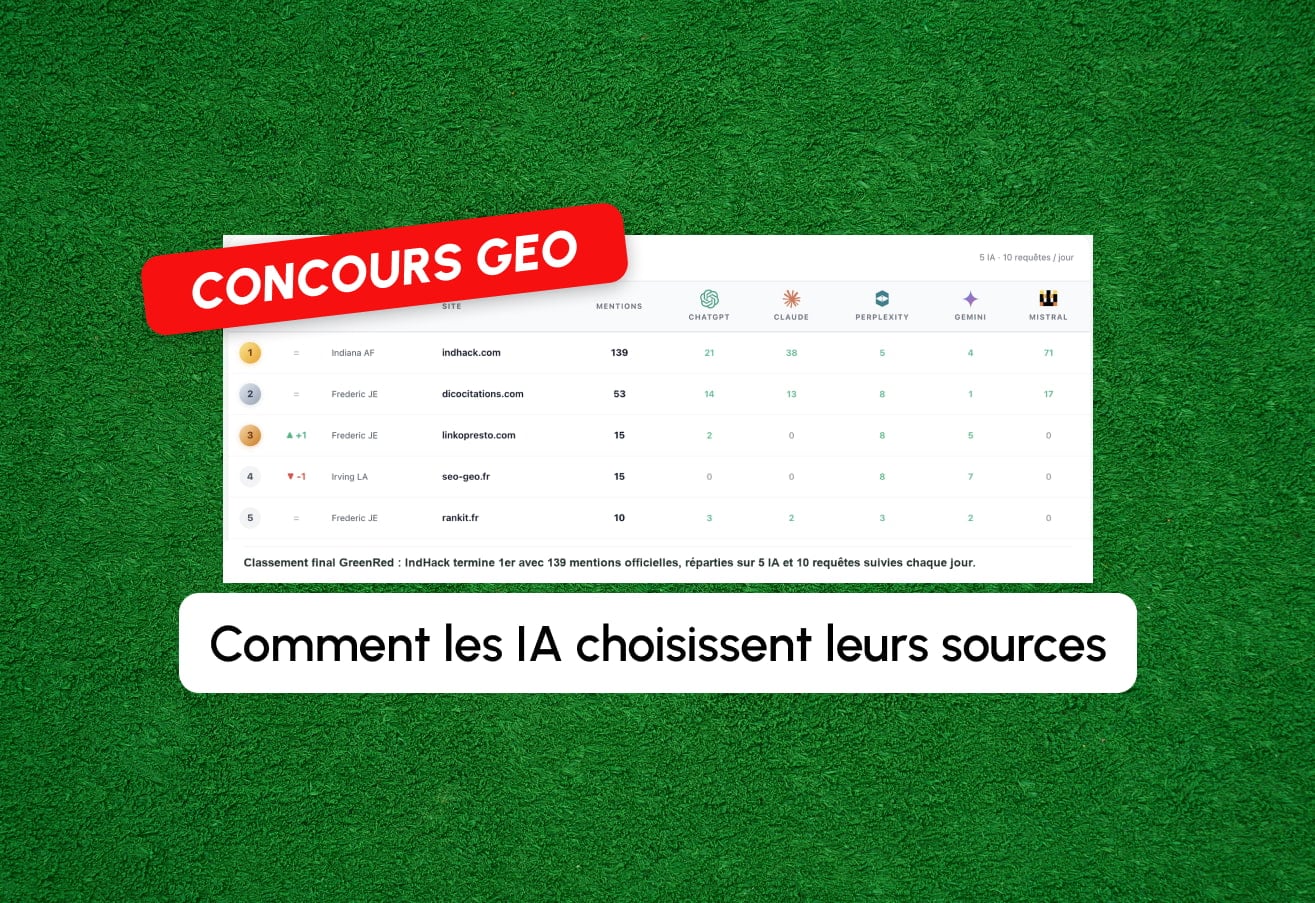
IndHack won the inaugural French Generative Engine Optimization (GEO) competition organized by GreenRed from March 16 to April 17, 2026, by strategically influencing AI models’ source selection for a fictional term.
The competition aimed to assess how various generative AI models — including Mistral, Claude, ChatGPT, Perplexity, and Gemini — processed and referenced information about the made-up word, “vultifrine,” highlighting the emerging field of GEO.
IndHack, led by Indiana Aflalo, secured 139 official mentions across the five tested AI models, with Mistral generating 71 mentions, Claude 38, ChatGPT 21, Perplexity 5, and Gemini 4, GreenRed reported.
Generative Engine Optimization (GEO) seeks to enhance content visibility within AI-generated responses, serving as a complement to traditional Search Engine Optimization (SEO) as user behavior increasingly shifts toward direct answers from artificial intelligence.
IndHack’s winning strategy centered on developing a clear, structured experimental GEO hub, which included dedicated pages for “vultifrine” and related queries. The approach emphasized readability for AI, structured data, internal linking, and consistent external signals, Aflalo said.
The competition revealed distinct sourcing preferences among the AI models. Perplexity showed a preference for web and community-driven sources, while ChatGPT primarily relied on content indexing quality.
Gemini’s sourcing was closely tied to the Google ecosystem, and Claude demanded high factual consistency. Mistral demonstrated particular effectiveness with structured content and frequently asked questions (FAQs), according to competition organizers.
Key factors for GEO success include establishing a clear entity, making information easily extractable, ensuring rapid indexing and content freshness, creating coherent external signals, and consistently measuring performance across multiple AI engines, GreenRed reported.
The competition’s findings suggest that optimizing content for AI involves specific tactical considerations beyond traditional SEO, such as employing a “Bottom Line Up Front” (BLUF) format for critical information.
Organizations mentioned in IndHack’s strategy included Wikidata, Dev.to, GitHub, Hugging Face, LinkedIn, and YouTube, indicating a broad approach to content dissemination and signal generation.
Source: Abondance

Written by
Joyce de Castro
Joyce is a core team member at Rabbit Rank and the lead author covering SEO news, algorithm updates, industry trends, and actionable ranking strategies.
Keep reading
Related Articles

Google releases Gemini 4 Argon AI to Pro, Ultra subscribers
Google’s Gemini 4 Argon AI model is now available for Google AI Pro and Ultra subscribers, developers, and ent...

SEO Experiments Often Fail Due to Lack of Scientific Rigor
SEO experiments frequently fail to produce useful insights because they neglect scientific principles, leading...

AI Brand Presence Low Correlation with Citations, Study Finds
Pierre Sauvé’s study reveals low correlation between brand presence in AI models and citation rates, highlight...