

Image credit: Abondance
Google introduced its new artificial intelligence framework, Retrieve-for-Train, on Tuesday, designed to improve the diversity and speed of AI-powered search results by separating training from execution.
The innovation addresses long-standing issues of redundancy and high latency prevalent in traditional language models used for generating search queries, according to the company.
Traditional language models often suffer from what Google described as ‘paraphrastic collapse,’ a phenomenon where the models generate numerous redundant sub-queries, leading to less diverse results.
Furthermore, the autoregressive nature of classic language models contributes to high latency because they generate tokens sequentially, slowing down the overall process.
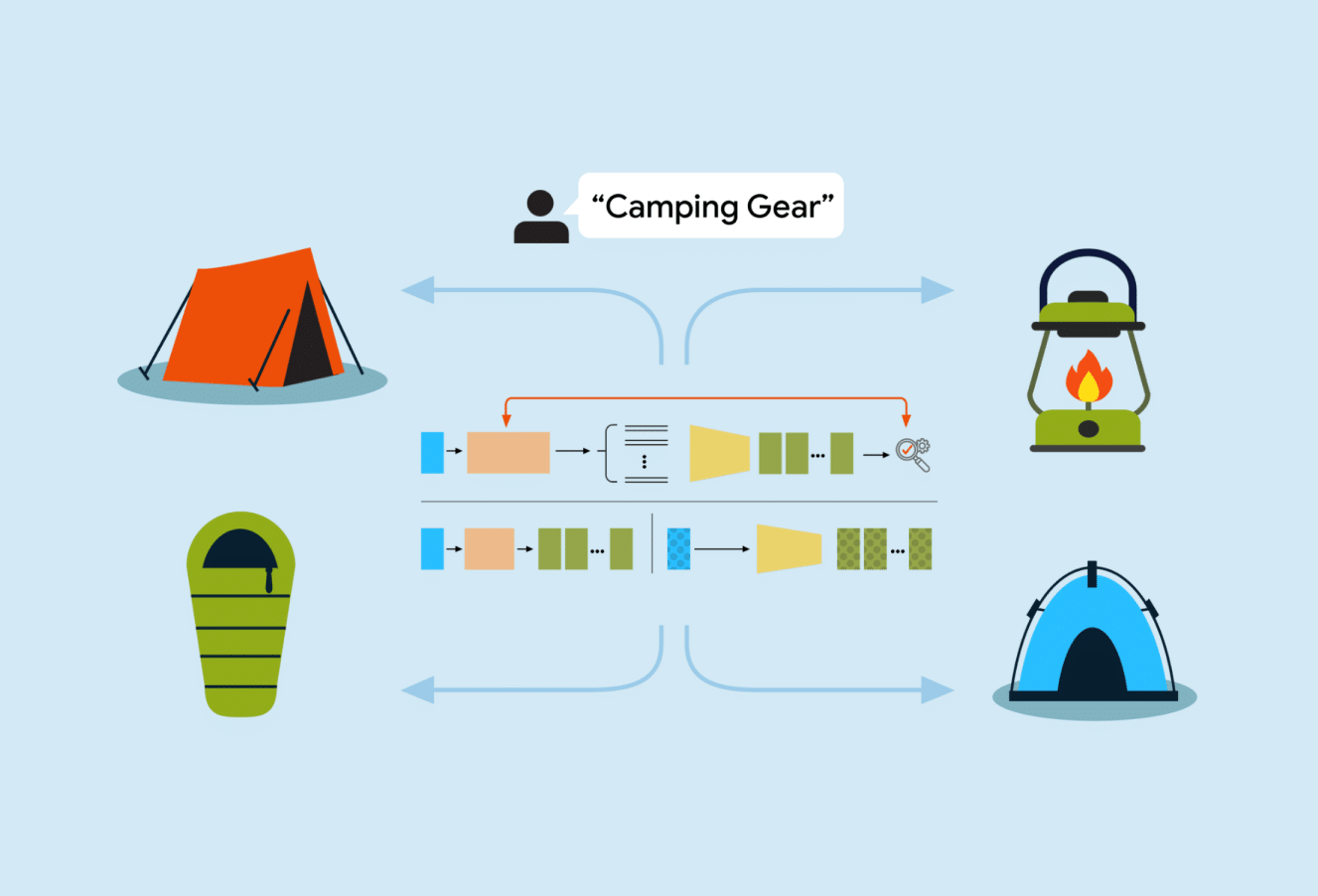
Retrieve-for-Train tackles these challenges by employing a one-time, offline reinforcement learning process to create training data for a more efficient, lightweight diffusion model.
This approach allows the system to generate diverse sub-queries without the real-time computational burden of autoregressive models, Google stated.
The final diffusion model developed through this framework contains 53.9 million parameters, a relatively compact size for such a system.
Google reported that this model offers a significant speed increase, performing 12 to 20 times faster than conventional autoregressive methods.
To ensure the quality and relevance of the generated results, Retrieve-for-Train incorporates a three-criterion reward system during its training phase.
This system evaluates groundedness, diversity via a Vendi Score, and alignment, which collectively prevent the model from producing absurd or repetitive outcomes.
The company said that by focusing on these criteria, the framework ensures that the AI generates useful and varied search suggestions.
The global technology firm emphasized that the separation of training and execution phases is key to achieving both efficiency and improved output quality in AI search.
This development aims to enhance user experience by delivering more comprehensive and quicker search results across Google’s platforms.
Source: Abondance

Written by
Joyce de Castro
Joyce is a core team member at Rabbit Rank and the lead author covering SEO news, algorithm updates, industry trends, and actionable ranking strategies.
Keep reading
Related Articles

French Government Website Closes SEO Backlink Loophole
A loophole on a French government website, exploited by SEO practitioners for dofollow backlinks, has been clo...

Google concludes spam update, issues new crawl guidelines
Google’s September 2026 spam update concludes. New crawl timing ranges, Search Console multi-country traffic,...

Google: HTML Sitemaps Aid User Navigation, SEO Value
Google’s John Mueller clarified that HTML sitemaps, while not replacing XML, still benefit SEO by enhancing us...