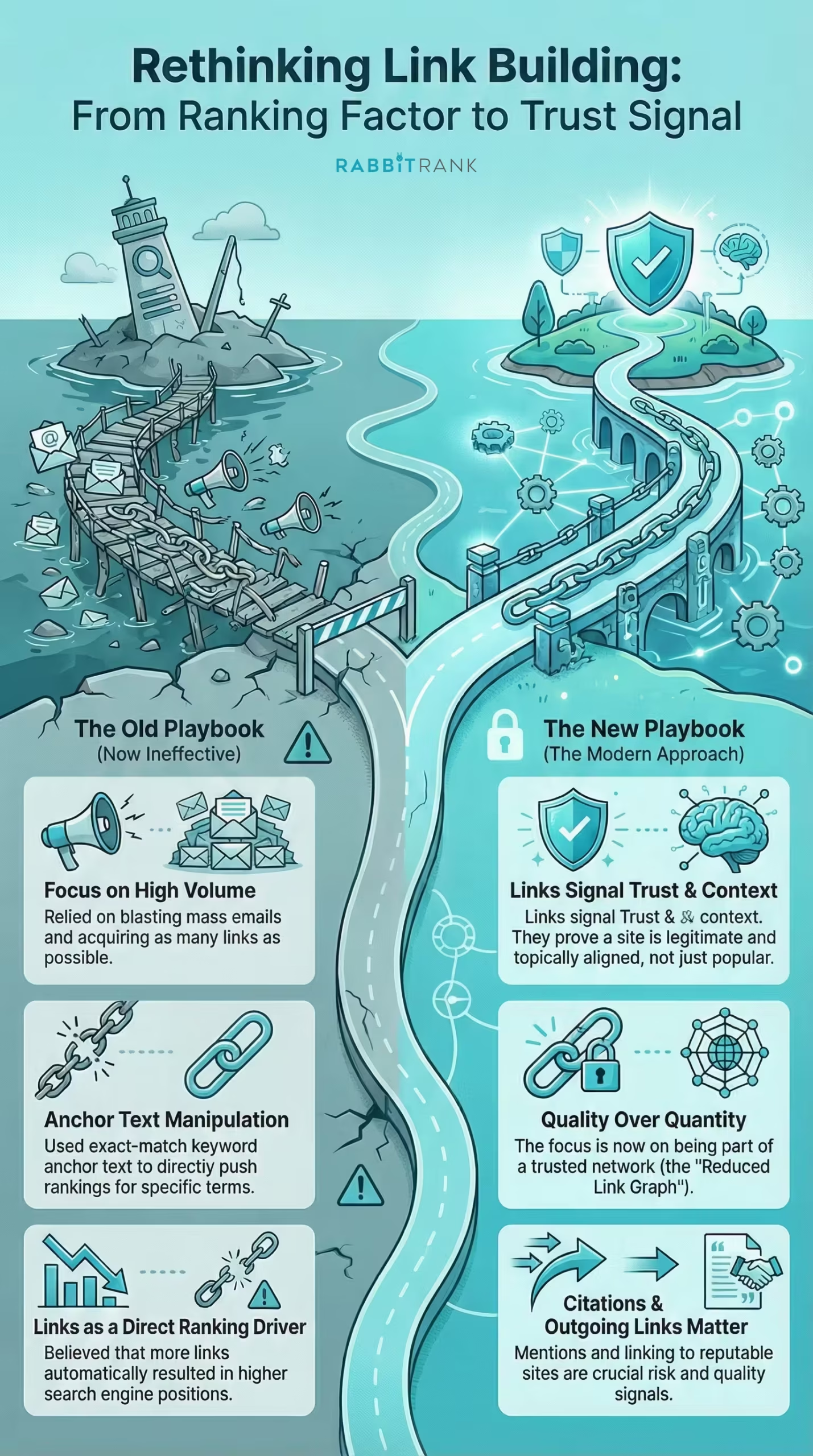
Remember when SEO felt like a secret club with bizarre rituals? Stuffing keywords until your headers wheezed, churning out thin affiliate pages, and chasing backlinks like a desperate treasure hunter? If that sounds familiar, brace yourself. The game has changed – radically.
Welcome to the SEO Renaissance, where understanding humans and building genuine authority dethrones the old tricks. Let’s break down the seismic shift.
1. Keywords vs. Intent: From Robots to Humans
Old: Cramming your exact keyword into every H1, H2, image alt tag, and probably the office coffee machine.
New: Understanding the why behind the search. What does the user actually want? A simple answer? A deep dive? A comparison? Then, covering that intent comprehensively with natural language, related subtopics, and content that reads like a helpful expert, not a keyword robot. It’s a vibe check for relevance.
2. Affiliate Sprawl vs. Authority Hubs
Old: Building dozens of shallow “best toaster” pages hoping one sticks.
New: Creating deep, interconnected “Authority Hubs.” Imagine a central pillar page on “Home Coffee Brewing,” surrounded by detailed layers: guides on grinders, bean origins, pour-over techniques, troubleshooting, and eco-friendly practices. Structured with schema markup so search engines understand the relationships, and formatted clearly (think FAQs, bullet points, summaries) so both humans and AI can easily grasp and use your knowledge. Quality over quantity, depth over breadth.
3. Scattered Posts vs. Knowledge Mapping
Old: Writing isolated blog posts that vaguely touch a topic, leaving gaps everywhere.
New: Mapping your niche like a meticulous cartographer. Imagine your topic area as a complex knowledge graph. What are all the core concepts? How are they connected? What questions branch off? Your mission: identify every gap, every unanswered query, and systematically create content to fill it. Become the undisputed, complete source for your domain.
4. Backlink Spam vs. Natural Authority Signals
Old: Blasting “best vacuum cleaner” as anchor text 50 times on dubious directories.
New: Varying anchor text naturally and earning links through value. Exact-match anchor spam is now a guaranteed way to get choked out by Google’s algorithms (the “Darce choke” reference is spot on!). Focus on diverse, brand-related, and natural-sounding anchors earned by creating content people genuinely want to reference. It’s about building trust, not just links.
5. Domain Gimmicks vs. Real Brand Building
Old: Obsessing over “BestCoffeeMakersOnline.com” thinking the domain is the strategy.
New: Building a brand people actively seek out. Think “James Hoffmann,” “Wirecutter,” or “Bon Appétit” in your niche. People search for you because they trust your expertise and perspective. A memorable, authentic brand name becomes its own powerful ranking signal and drives direct traffic. It’s about reputation, not a keyword string.
6. Vanity Metrics vs. Impactful Influence
Old: Bragging about sheer volume of backlinks (regardless of quality).
New: Measuring influence where it matters most: AI. The new bragging right? “Our content is cited in Google AI Overviews.” Appearing in SGE (Search Generative Experience) summaries is the ultimate signal of trusted, top-tier authority. It means Google’s AI deems your information the most helpful, accurate, and relevant source for users. This is the pinnacle of modern SEO success.
The Human-Centric Future is Here
The cold, mechanical tactics of old SEO are fading relics. Google’s evolution demands a fundamentally different approach:
empathy, depth, structure, and genuine expertise.
It’s no longer about tricking algorithms; it’s about deeply understanding human questions, mapping knowledge landscapes with precision, building interconnected hubs of undeniable authority, and presenting it all in a way that’s accessible and trustworthy for both people and increasingly sophisticated AI systems. The brands investing in this comprehensive, human-first strategy aren’t just ranking better; they’re becoming the indispensable resources in their fields.
The Renaissance wasn’t just a change in style; it was a revolution in thought. The same is true for SEO. Embrace the depth, prioritize the human, build the authority, and watch your presence – and your AI citations – soar. The future of search belongs to the truly helpful. Are you building that future?